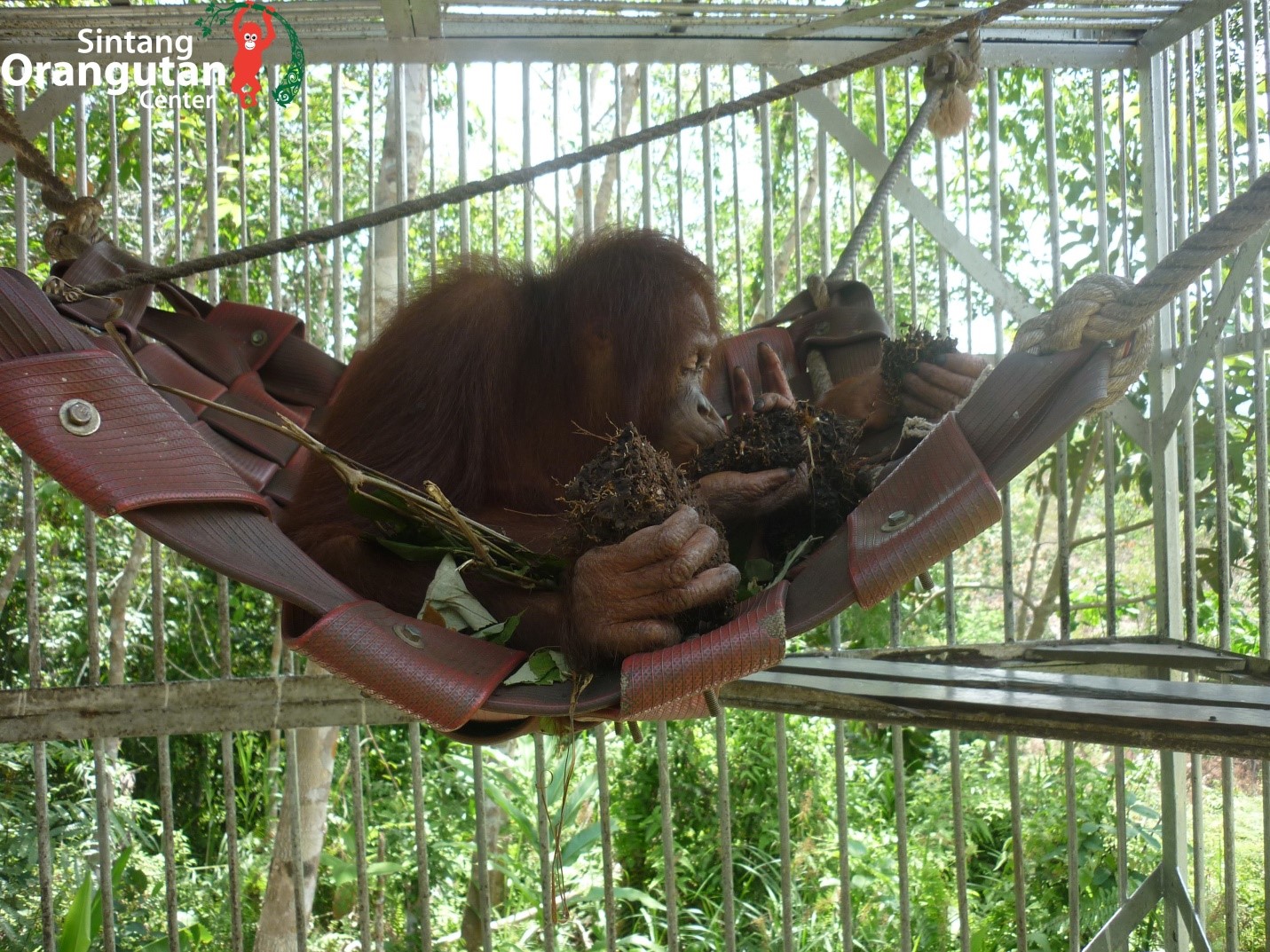
The Sintang Orangutan Center (SOC) is a local environmental NGO located in Sintang, West Kalimantan, Indonesia, on the island of Borneo
Mission and Collaboration:
- SOC’s primary mission is to rescue, rehabilitate, and release orangutans back into the wild.
- It operates under an official agreement with the Forestry Ministry Department.
- SOC works in collaboration with the Indonesian government, specifically the West Kalimantan Natural Resources Conservation Agency (BKSDA) and the Betung Kerihun and Danau Sentarum National Park Authority (BBTNBKDS), to carry out its conservation efforts.
Core Activities (Rescue, Rehabilitation, and Release):
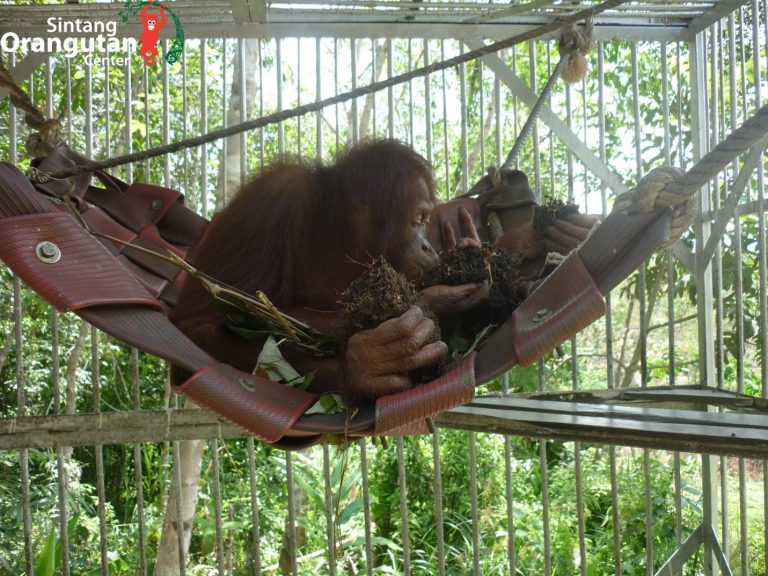
- Rescue: Since 2010, SOC has rescued and cared for more than 50 orangutans. Orangutans are typically rescued after being victims of the illegal wildlife trade, confiscated from people who kept them as illegal pets, or rescued after being victims of conflict with local people.
- Rehabilitation: SOC’s rehabilitation program aims to equip orangutans with the survival skills necessary for independent living in the wild.
- Rehabilitation involves medical health examinations and a quarantine period.
- Healthy orangutans are transferred to socialization groups where they can learn with peers.
- The final preparatory stage is training in a forest school, which is a fenced-in, intact rainforest area, such as the Jerora Forest School.
- Release: The ultimate goal is to return rescued orangutans to their natural habitat so they can live independently. All releases have successfully taken place in a special part of the Betung Kerihun National Park (TNBK) in Kapuas Hulu District, West Kalimantan, which offers pristine tropical rainforest and abundant natural food sources.
- Since 2017, SOC has conducted 16 orangutan release activities, returning a total of 36 individuals to the wild.
Supporting Activities
- In addition to hands-on orangutan work, SOC provides awareness and education programs for local communities.
- These programs are designed to reduce threats to orangutans and their habitat, such as:
- Deforestation, by providing sustainable agricultural alternatives.
- Illegal poaching.
- The keeping of illegal pets like orangutans.
- SOC emphasizes that environmental education, introduced at an early age, serves as a vital foundation for shaping a future generation that is environmentally conscious and responsible. Examples of these activities include visits from kindergartens and teaching programs in release buffer zones.