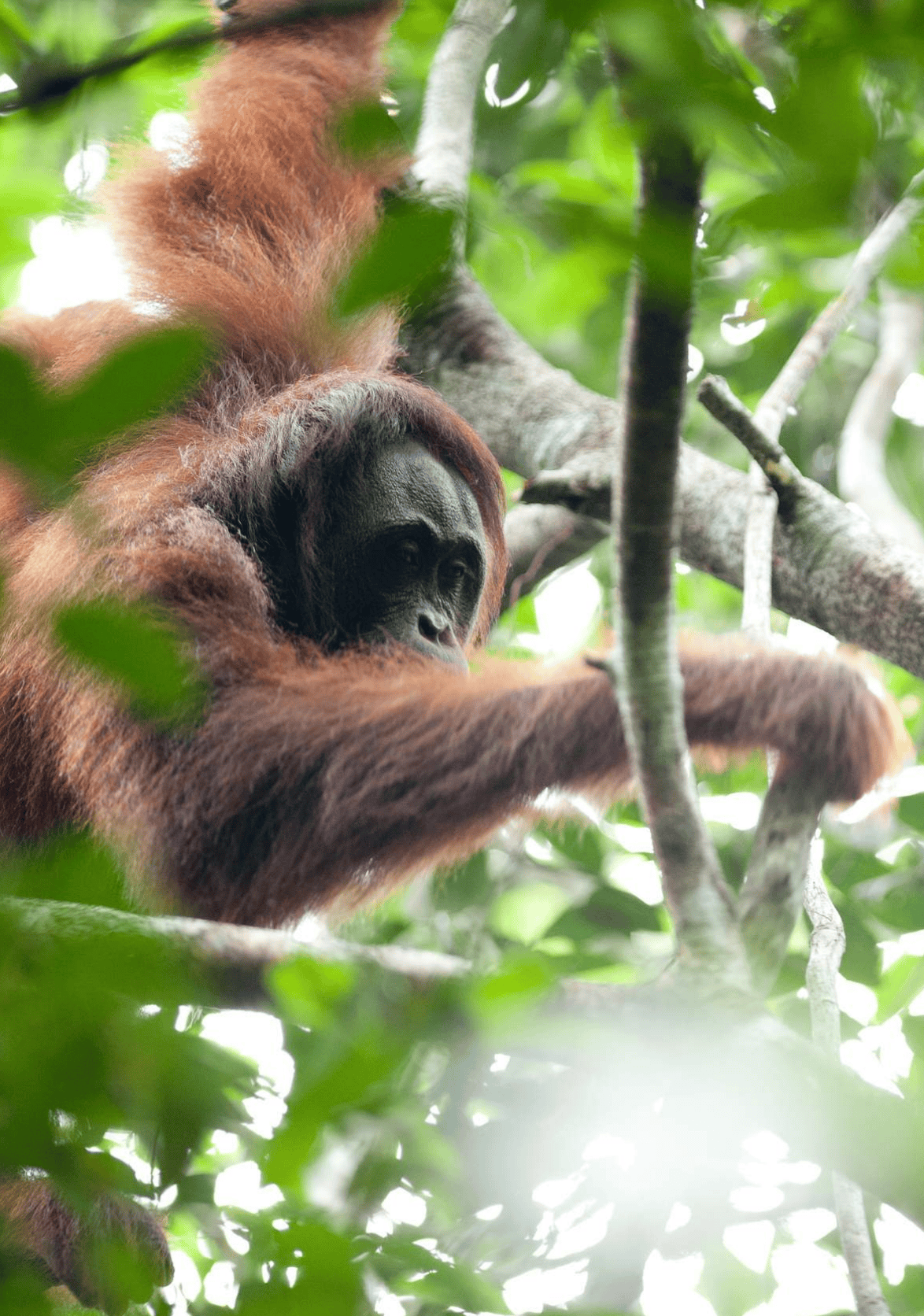

Deep in Central Kalimantan, the Sebangau National Park protects one of the world’s most important peat-swamp forests—and the largest remaining population of wild Bornean orangutans, estimated at more than 8,000 individuals. But decades of illegal logging and canal cutting have left this fragile landscape vulnerable to drainage, peat fires, and disease risks to both orangutans and people.
With support from the Orangutan Conservancy, the Borneo Nature Foundation (BNF) is tackling these interconnected threats through an ambitious two-part effort: restoring damaged peatland and launching the first long-term orangutan health monitoring program in Sebangau.
Restoring Forests, Protecting Orangutans
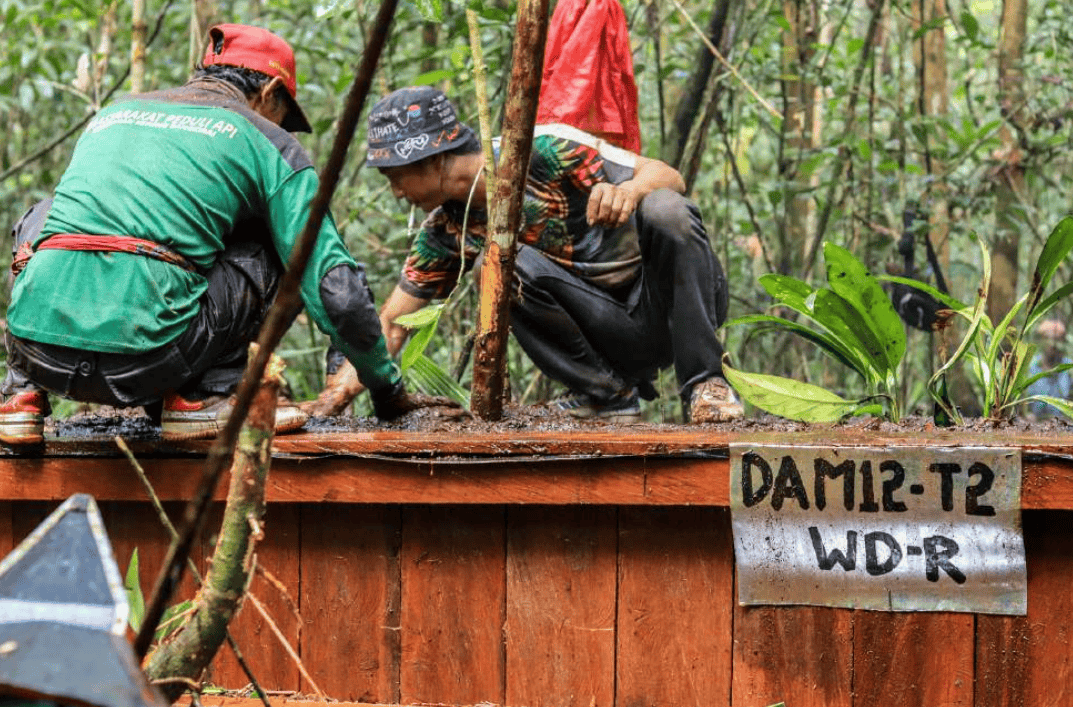
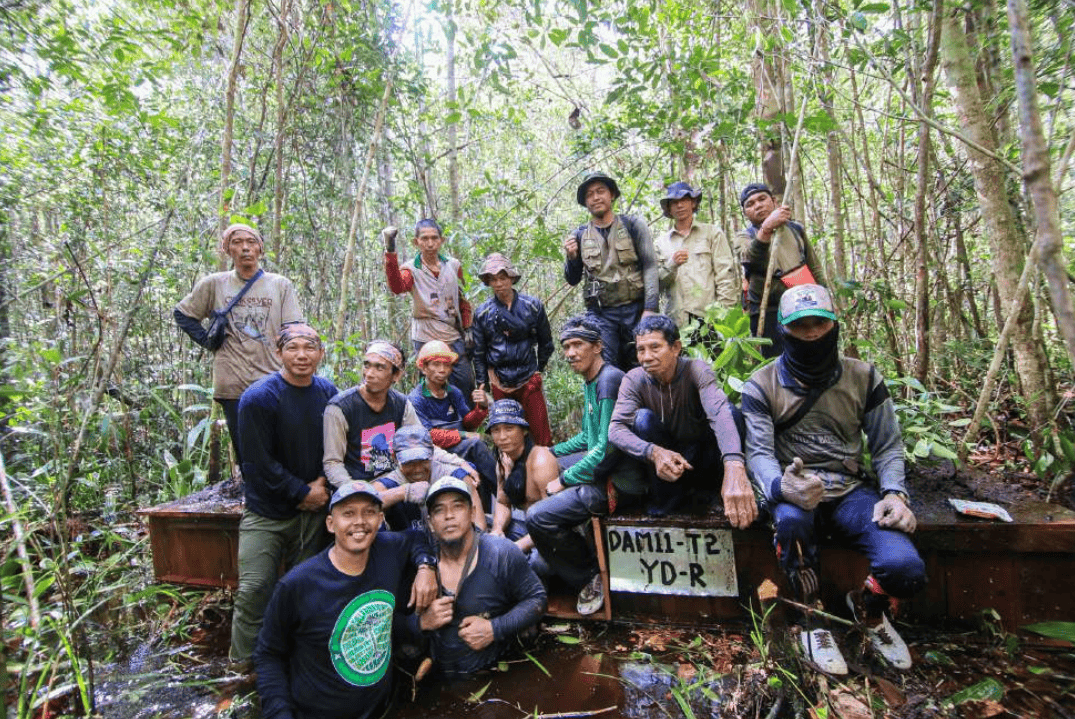
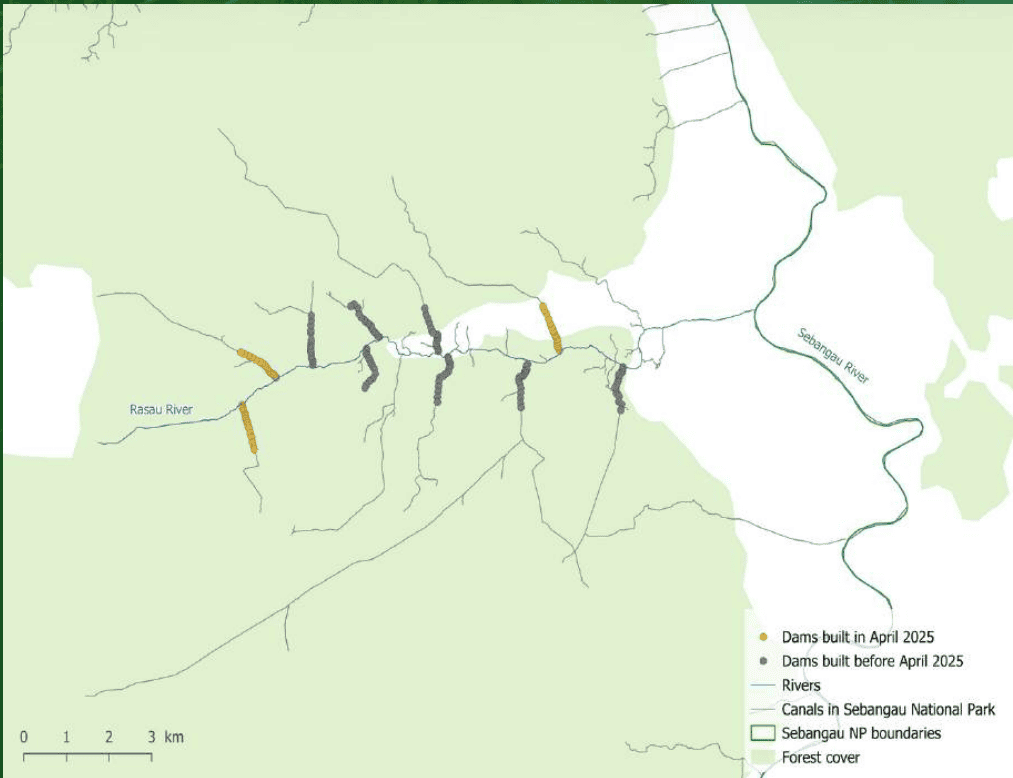
Healthy forests are vital for healthy orangutans. To keep Sebangau’s peatlands wet and fire-resistant, BNF’s teams have built more than 1,000 dams since the program began in 2016—a major milestone celebrated this year. In the first half of 2025 alone, 48 new dams were constructed across the Rasau River system, including eight directly funded by the Orangutan Conservancy.
These structures slow water flow, raise water tables, and rewet the peat, reducing the risk of catastrophic fires. Local community members are closely involved, carrying out ongoing monitoring that confirms the dams’ success in stabilizing water levels. Work is already planned for the next phase in the Bangah River area to ensure continued restoration through 2026.
Monitoring Orangutan Health
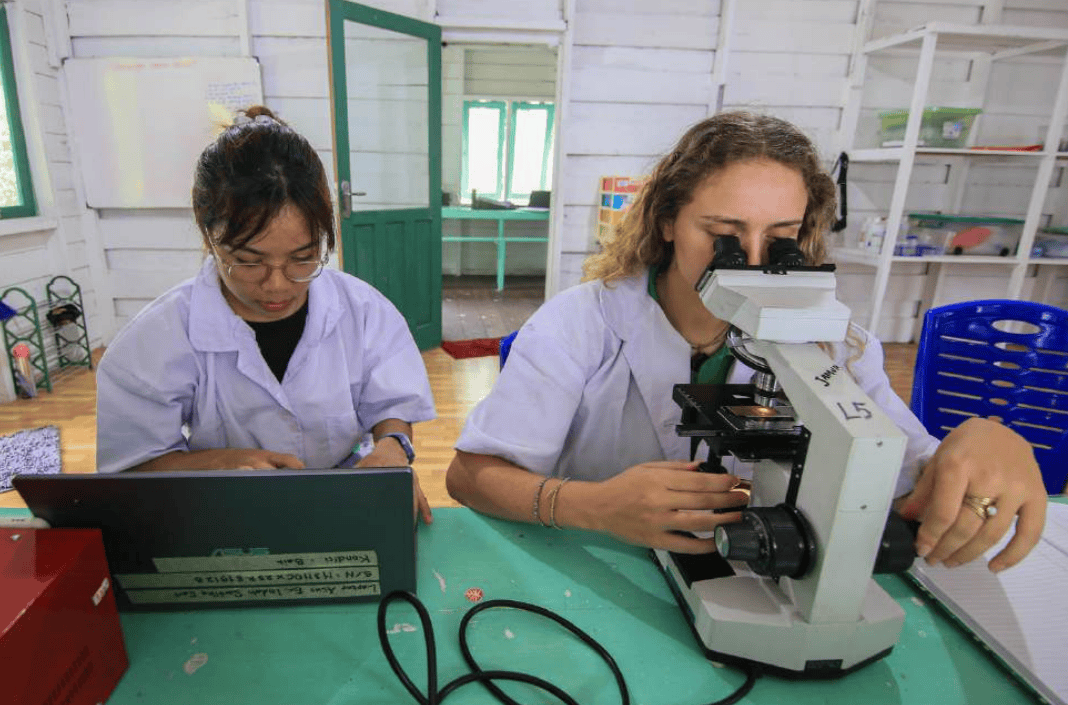
At the same time, BNF has launched the Sebangau Orangutan Health Monitoring Program—the first of its kind in the region. The team has already collected nearly 100 fecal samples from known wild orangutans representing a range of ages and sexes. Laboratory analysis has identified eight different parasite species, providing the first reliable baseline dataset for Sebangau’s orangutan population.
This information is critical for understanding disease risks, tracking the health impacts of habitat change, and guiding future conservation interventions. The project also builds local scientific capacity: two Indonesian lab assistants and five university students, including two completing undergraduate theses, have been trained in wildlife health monitoring and laboratory techniques.
Looking Ahead
In the months ahead, the team will continue analyzing samples, expand the dataset, and construct additional dams in the Bangah region to reach the 2025 goal of 100 new dams. Findings will be shared with the Sebangau National Park Authority to inform management decisions and strengthen habitat protection.
The Orangutan Conservancy is proud to support BNF’s ongoing efforts to protect Sebangau’s peat-swamp ecosystem, safeguard the health of critically endangered orangutans, and empower the next generation of Indonesian conservation scientists. Together, we are creating a healthier, more resilient future for orangutans and their forest home.