
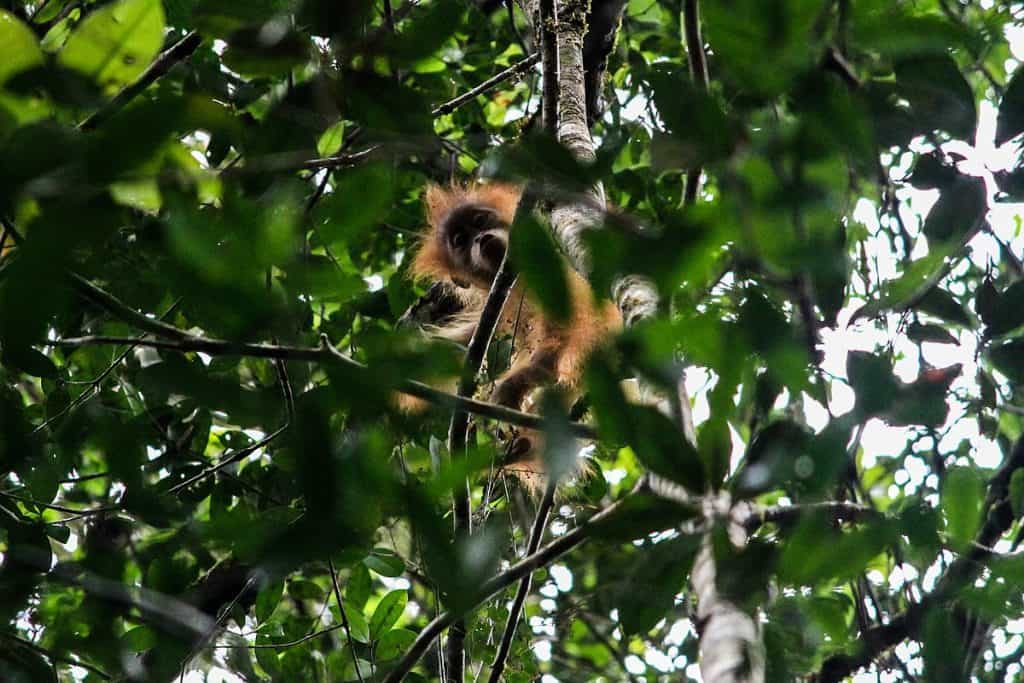
The high-altitude canopy of North Sumatra is usually a symphony of biodiversity, but a haunting stillness has taken hold. Following the landfall of Cyclone Senyar in late November, conservationists monitoring the Batang Toru ecosystem report a worrying absence of the world’s most vulnerable great ape: the Tapanuli orangutan.
A Population Under Pressure
Identified by science as a unique species only in 2017, the Tapanuli orangutan (Pongo tapanuliensis) already faced a steep climb toward survival. With a total population of fewer than 800, they are the rarest of all great apes. Unlike the Bornean or Sumatran species, these residents of the mountainous highlands have nowhere else to go when their specific habitat is compromised.
Heartbreak in the Debris
While nature often provides wildlife with the instincts to flee rising waters, the sheer violence of the recent landslides may have left no room for escape. In the village of Pulo Pakkat, relief workers uncovered the remains of an orangutan tangled in flood debris.
Deckey Chandra, a humanitarian worker with deep roots in Tapanuli conservation, described the scene as a “graveyard.” The discovery has shifted the mood from cautious optimism to deep concern, suggesting that the “sixth sense” often attributed to animals was no match for the speed of the mudslides.
Mapping the Devastation
The scale of the habitat loss is becoming clearer through satellite analysis. Professor Erik Meijaard of Borneo Futures suggests that the environmental footprint of the storm is massive:
- Areal Loss: Estimated 7,200 hectares of primary forest stripped to bare soil.
- Population Impact: Approximately 35 individuals are believed to have lived within the direct path of the most severe landslides.
- The Survival Factor: Primate biologists like Serge Wich note that orangutans typically “hunker down” during heavy rain rather than fleeing. This behavioral trait likely left many trapped as the hillsides themselves gave way.
Rebuilding a Sanctuary
The tragedy extends to the very foundations of orangutan research. The Ketambe Research Centre, a landmark for primate study, was nearly leveled by the storm. Re-establishing this hub is a top priority for the Sumatran Orangutan Conservation Programme, as a human presence in the forest remains one of the strongest deterrents against further habitat encroachment.
Our Commitment
At the Orangutan Conservancy we are closely monitoring the situation as search and rescue teams continue their difficult work. The Tapanuli orangutan represents a unique branch of our own evolutionary tree; losing even a handful of these individuals is a blow to global biodiversity.
Now more than ever, orangutans need their human advocates to stand firm. We must focus on habitat restoration and the rapid rebuilding of research infrastructure to ensure that this silence in Batang Toru is only temporary.
Attribution: This report was developed using data and interviews originally published by BBC News (“Fears grow that world’s rarest apes were swept away in Sumatran floods” by Navin Singh Khadka).