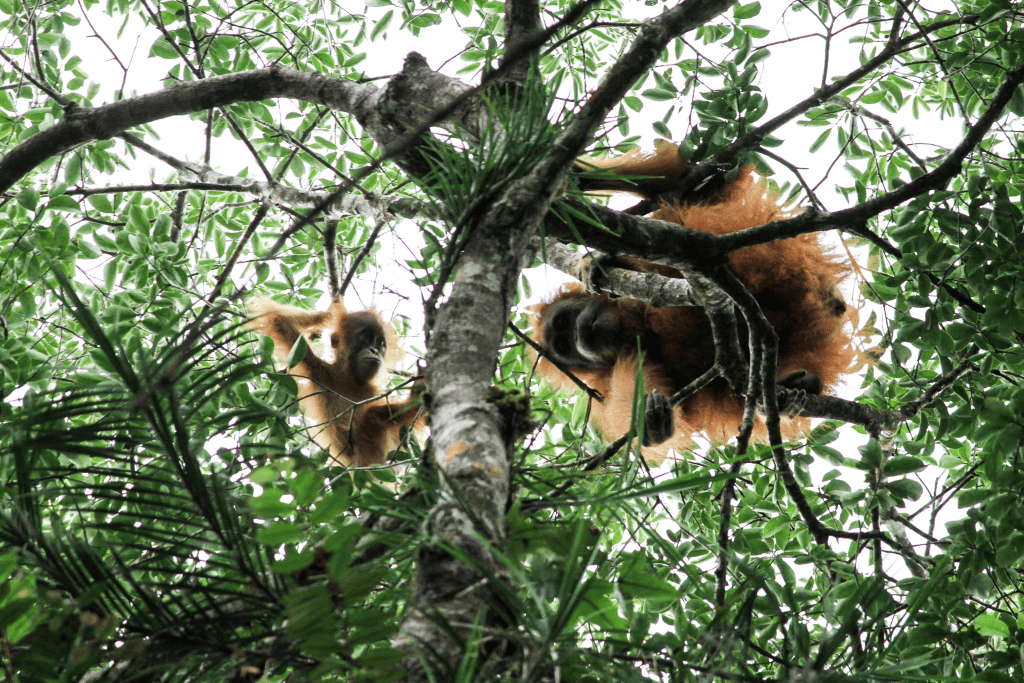
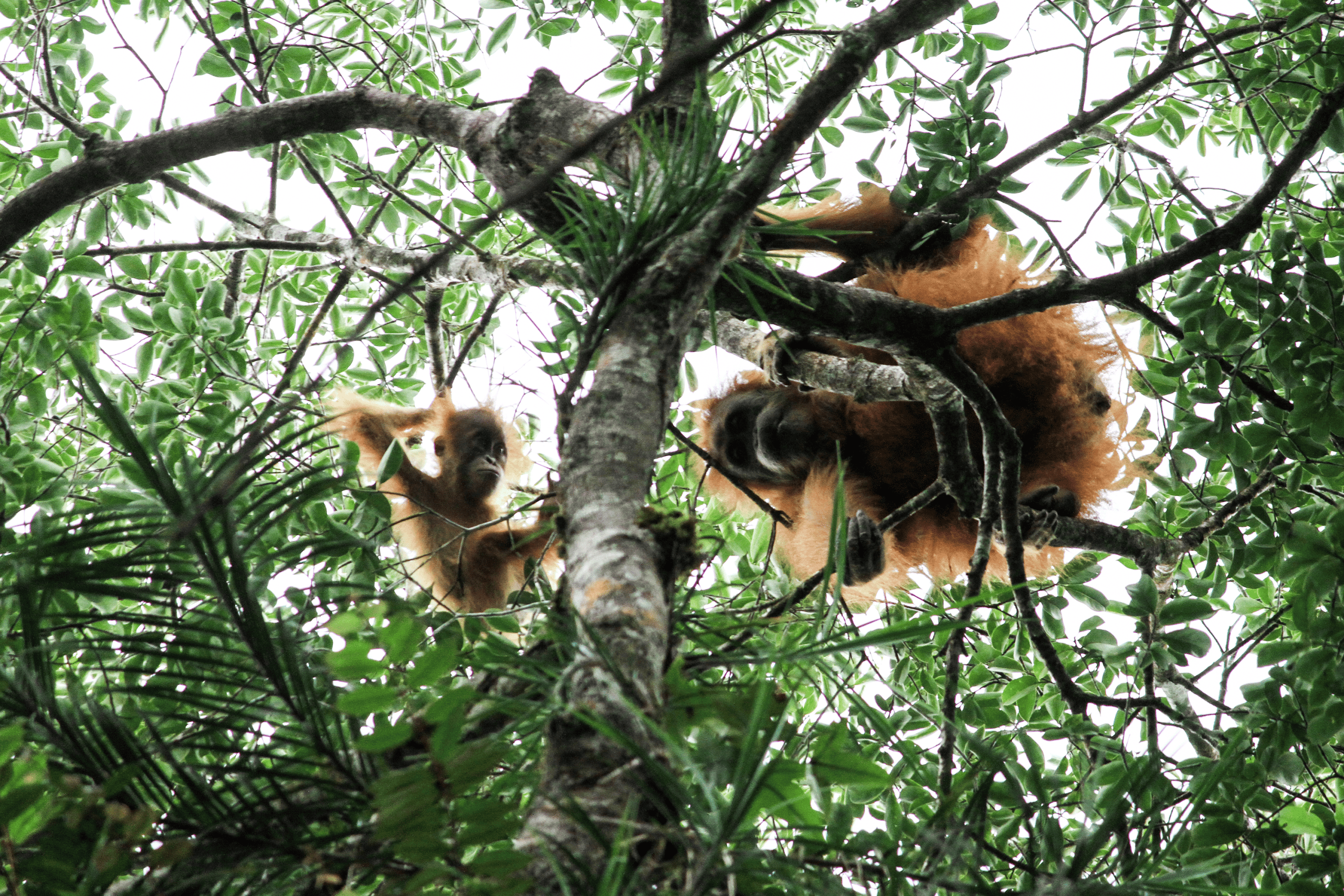
Orangutans are known for their impressive intelligence and their lengthy period of childhood dependence, during which immatures spend many years learning the crucial survival skills needed for adulthood. But how exactly do young, inexperienced Sumatran orangutans acquire the extensive knowledge required to survive in their complex jungle homes? A groundbreaking study leveraging sophisticated computer modeling suggests that for an orangutan, culture is critical in driving diet development past individual potentials.
In fact, the sources show that social learning is not just helpful—it’s required for young orangutans to develop the broad diet repertoire necessary for survival.
Decoding the Orangutan Menu
Wild apes, including orangutans, possess vast diets that regularly encompass several hundred different types of food. For an orangutan, knowing a sufficiently broad number of foods is essential to meet baseline energetic and nutrient requirements, especially during times of food scarcity.
To understand how this expansive dietary knowledge develops, researchers translated over 12 years of behavioral data collected from wild Sumatran orangutans (at the Suaq Balimbing research area) into an empirically validated Agent-Based Model (ABM). This model simulated the dietary learning trajectory of young orangutans up until the age of 15 years.
The model aimed to determine if immatures could construct their knowledge repertoires primarily through independent exploration, or if they needed social learning to acquire adult-like breadth.
The Three Pillars of Social Learning
During their long dependency phase (up until around 7 to 9 years when they become independent from their mothers), young orangutans benefit from several forms of social learning, which were included in the model:
- Exposure: Immatures follow conspecifics (usually their mothers) through the home range to different areas where food is available, meaning they are exposed to feeding patches. Mothers, on average, visit about 27 feeding patches per day.
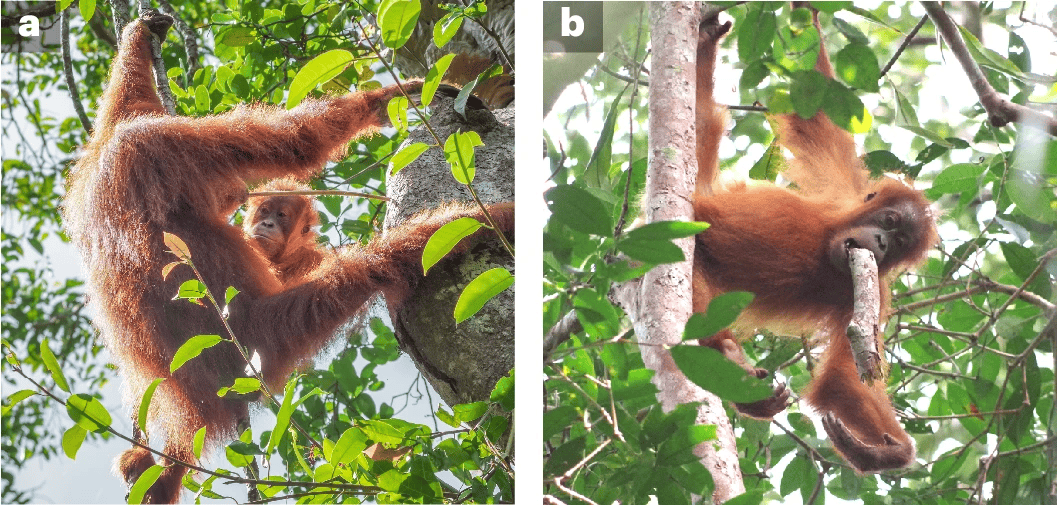
- Enhancement: Being in close proximity (within 10 meters) to other orangutans, often their mothers, increases the immature’s likelihood of exploring food items.
- Peering: This involves close-range observation of a conspecific’s foraging behaviors (like watching a mother use a stick tool to extract termites). Peering is frequently followed by exploration of similar objects and can enhance learning. It is particularly important for acquiring knowledge about rare and complex foods that require multi-step processing.
Culture: The Key to an Adult-Sized Diet
In the wild, orangutans accumulate adult-like diet repertoires (defined as 90% of the full adult diet size, or 223 food items) by the onset of independence (around age 9).
When the simulation included all forms of social learning (Exposure, Enhancement, and Peering), the diet development trajectory accurately matched the outcomes observed in wild individuals. In this scenario, diets reliably reached adult-like breadths by the onset of independence.
However, when researchers experimentally removed forms of social learning, the outcomes were drastically different:
- Removing Peering (Exposure and Enhancement treatment): The rate of diet development slowed, and only 1.6% of simulated immatures developed adult-like repertoires by the end of immaturity (age 15).
- Removing Peering and Enhancement (Exposure Only treatment): Diet learning was initially very slow, and no immatures developed adult-like diet repertoires by the end of immaturity.
The results demonstrated that despite simulated immatures encountering approximately 148,000 feeding patches throughout their youth, these opportunities alone were not sufficient for broad-scale diet development without the additional effects of peering and enhancement.
These findings confirm that social learning accelerates the development of an orangutan’s diet repertoire, ultimately producing diets that are broader than any one individual could construct independently.
Culturally Dependent Repertoires
This study concludes that orangutan diets constitute a likely example of a culturally dependent repertoire in a non-human species. Just as humans accumulate vast repertoires of culturally transmitted information that exceed any one person’s capacity for innovation, orangutans rely on learning from others to acquire the fundamental knowledge needed for survival.
This information has significant implications for conservation. Understanding the critical role of social learning in diet breadth is vital for reintroduction strategies, particularly for orphaned orangutans who may lack the necessary cultural knowledge. Programs like “forest schools” must continue to consider the importance of social learning to maximize the survival likelihood of these immatures once they are released back into the wild.
The orangutan’s survival is not just biological; it is cultural.