
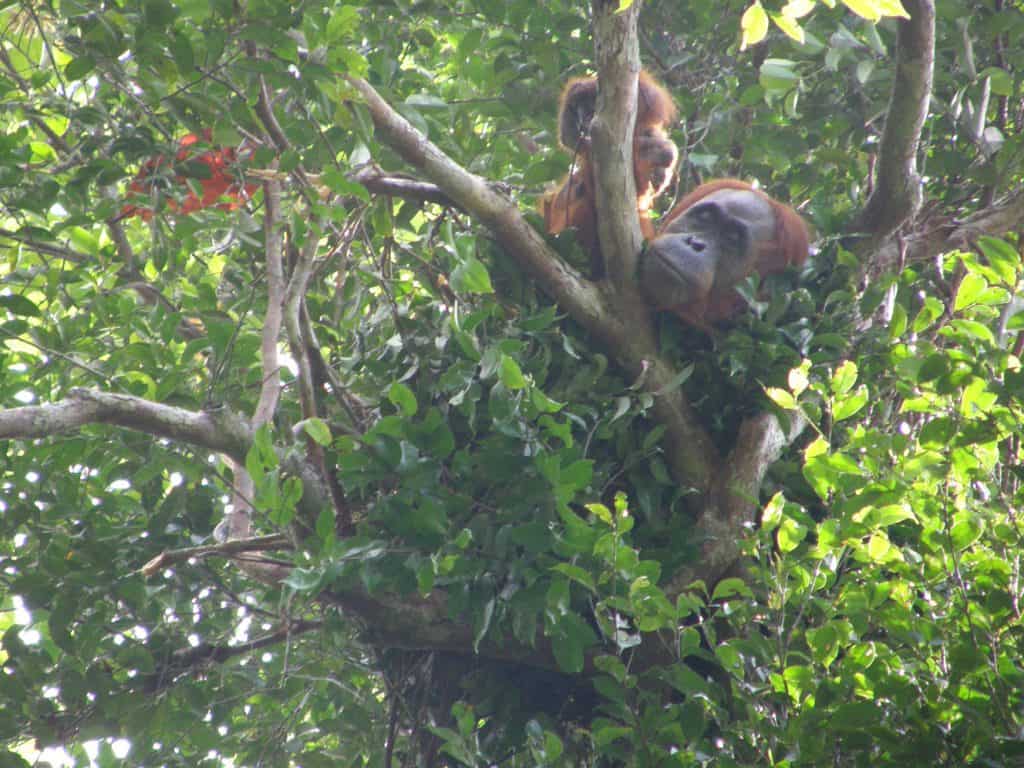
Orangutans may look peaceful when they sleep, but recent science shows that their rest is a carefully balanced act. A new study published in Current Biology reveals that wild orangutans regulate their sleep with remarkable flexibility—compensating for lost nighttime hours by napping during the day.
This discovery adds an unexpected dimension to our understanding of orangutan behavior and conservation. Sleep isn’t just downtime—it’s part of their survival toolkit in constantly shifting forests.
Night, Day, and the Balancing Act
The study tracked 53 wild Sumatran orangutans across 455 days of observation, using nest chronology (when and where they sleep) as a proxy for sleep periods.
The authors found:
- On nights when orangutans slept less, they compensated the next day with longer cumulative nap durations.
- When naps were shorter, the number of daytime naps increased—indicating flexibility in both frequency and duration.
- Several ecological and behavioral factors influence sleep: orangutans slept less when traveling farther the previous day, or when food intake was low, ambient temperature was cooler, or during rainfall events.
- Interestingly, social associations had an impact: nights and days with more conspecific presence (i.e. being in groups) were linked to shorter total sleep and nap times.
Together, these results suggest that orangutans maintain sleep homeostasis (a balance of sleep) by adapting daily rest when environmental or social pressures interrupt regular nighttime rest.
Why Sleep Flexibility Might Matter
This adaptation is more than a curiosity—it may reflect how orangutans survive in unpredictable forests. Here are key implications:
- Resilience to disturbance: In disturbed or fragmented forests, where travel distances, food scarcity, or human presence might disrupt nocturnal rest, the ability to nap may buffer negative impacts on health.
- Energy trade-offs: Sleep competes with time for feeding, social behavior, and movement. Flexible napping enables orangutans to optimize survival trade-offs when energetic demands shift.
- Indicator of forest health: A population forced into chronic sleep deficits might be under stress. Monitoring rest behavior could become a subtle indicator of ecological well-being.
References:
Slocombe, K. E., Boesch, C., Luncz, L. V., & others. (2025). Wild chimpanzees use cultural knowledge to forage adaptively in a changing world. Current Biology. https://doi.org/10.1016/j.cub.2025.07.041